


IT`S FREE

If you wish to compare more offers and surgery plans send your enquiry and photos on our email: info@aestheticserbia.com or via WhatsApp/Viber: +381 64 96 21 441

Our communication coordinator will notify you about our aesthetic clinics and surgeons that will contact you via email or phone.

Free accommodation for bigger procedure and free transfer from the airport.

Service and Support – Free of charge.
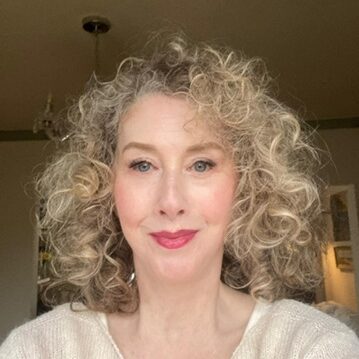
I travelled from England to have four procedures carried out (lower blepharoplasty, lip lift, brow lift and fat transfer to face). That’s a lot, but I don’t tend to do things by halves! Prior to choosing Aesthetics Serbia I did very extensive research. I am so glad that I chose them. The communication was excellent from day one. Milica was extremely helpful and answered all of my questions. Milan was very kind and responsive to all my questions. The main consideration for me was that I would be having the work carried out by a highly skilled surgeon. I chose Dr Goran at Medic Hill. I made the right choice for me. The care I received was first class and the price was very affordable. I’m still healing (5 days after first surgery), but everything is looking good. I would definitely recommend Aesthetics Serbia if you are thinking of travelling for plastic surgery. You will be in kind and caring hands, backed by world-class expertise.
Gill Christina - UK
What to say? Everything below the expression ‘ Perfect’ would be an understatement. From the organization by Mr. Jancovic the CEO of Whats Clinic Serbia and Aesthetic Serbia via the well ahead planned and executed work by Jasmina the Dr. Georgijev center director to the Absolut top of the top performance of Dr. Igor Gerorgiev and his team , the extra miles of all the nursing staff and assistants which took more than ever expected care of me , the drivers and everybody involved, the only thing to say is A BIG BIG Thank You and express my pure gratitude and appreciation for all what was done for me. Chapeau for this fantastic experience at the Dr. Georgijev center in Belgrad. I can definitely recommend the Dr. Georgijev center in Belgrad without any hesitation. Thank you!
Ingo Koller - Gemrany

I traveled from Switzerland to Belgrade for my surgery and everything went perfectly. The entire process was very well organized and i always had someone available to contact whenever i needed support. Thank you, absolutely recommended.
Marina Bodmer - Switzerland
Everything went according to plan. From the moment I sent my inquiry, through the excellent communication with the patient support Milica Gvozdenovic, as well as the online conversation with the doctors, quick answers to all my questions, the transfer from the airport and the very kind driver who met me at the arrival terminal with my name on board, to the perfectly performed operation and very kind doctors and all the staff at the hospital, later check-ups and return home also with the help of the AestheticSerbia team. I simply have no complaints. This is a very well-coordinated team.
Federica Jones - Italy
Overall I'm very satisfied, Milica Gvozdenovic was very helpful securing my appointments and answering all my questions. And I'm very happy with my breast augmentation results, Dr. Igor Maljkovic was tentative and professional. I will be back to him again on my next vacation to Belgrade for sure. The first time you see the professionalism of these people, the next time is easier and easier.
Marija Savic - USA
I want to shower praise on my patient coordinator with Aesthetic Serbia, who coordinated all my appointments with my surgeon in Belgrade, Serbia. As well, she was there for me to help coordinate the shuttle from the airport and options of available labs near my hotel for the required Covid Antigen test needed to exit the country and just keeping up with me to help along the way with written and voice messages, which were a comfort to me. It certainly made the whole process so much easier for me. Thank you so much!
Emily Andreasen - Denemark
Indescribably good site! You can get all the necessary information in one place, Milan reacted quickly and immediately informed me what the doctor said. Communication was through the WhatsApp application, as well as through email. The doctor called me directly which was so fine with me. I am very satisfied with this service.
Oliver Hoffmann - Switzerland

The Real Risk Is Not the Country — It Is the Decision Process
Most people researching plastic surgery abroad worry about the wrong things. They worry about the country. The hospital. The language barrier. These are all valid considerations — but none of them is the thing that actually determines whether you will have a good outcome.
The thing that matters most is the surgeon. Specifically: how you choose them, what you verify before committing, and what questions you ask before anyone picks up a scalpel.
Here are 7 questions that separate patients who have excellent experiences from those who end up writing cautionary tales on forums.
1. Are You the Surgeon Who Will Operate on Me?
This sounds obvious. It is not. In some clinics — particularly high-volume medical tourism operations — the surgeon you consult with is not always the one who performs your procedure. An assistant, a junior colleague, or a different doctor entirely may step in on the day.
Ask explicitly. Get it confirmed in writing. In Serbia, the informed consent document (required by law since 2025) should name your operating surgeon. If a clinic cannot confirm this, walk away.
2. How Many of This Specific Procedure Have You Done This Year?
A surgeon who performs 200 rhinoplasties a year is a different proposition from one who does 15. Volume matters — not because more is automatically better, but because high-volume surgeons encounter more complications, more difficult anatomies, and more revision cases. They develop pattern recognition that low-volume surgeons simply cannot.
Do not accept vague answers like “many” or “I have been doing this for 20 years.” You want a number. A specific, recent number.
3. Can I See Before/After Photos of Patients Like Me?
Not the greatest hits gallery on the website. You want to see cases that match your anatomy, your age range, and your starting point. A breast augmentation result on a 25-year-old athlete tells you very little about what to expect if you are a 45-year-old mother of three.
Good surgeons will show you a range of results — including cases where the outcome was good but not perfect. If a surgeon only shows flawless results, they are either exceptionally selective or not being fully transparent.
4. What Is Your Complication Rate?
Every surgery carries risk. Every surgeon has complications. The question is not whether complications happen — it is how the surgeon handles them and whether they are honest about the numbers.
A surgeon who claims a 0% complication rate is either lying, not tracking outcomes, or has not done enough procedures to have a meaningful sample. Ask about their revision rate too — how many patients need a second procedure to achieve the desired result.
5. What Happens If Something Goes Wrong After I Go Home?
This is the question that separates serious medical tourism operators from those who are just processing volume. When you fly home 10 days after surgery, you are leaving the direct care of your surgeon. If a complication develops at week 3 — a seroma, an infection, wound breakdown — what exactly happens?
You need a clear answer. Specifically:
- Who do I contact? (Direct surgeon access, not a call centre)
- How quickly will they respond? (Same day? 24 hours?)
- Can they assess remotely? (Photo/video review)
- If I need to return, what is covered?
- Can they refer me to a local surgeon in my home country if needed?
If a clinic cannot answer these questions clearly, they are not equipped for international patients.
6. What Exactly Is Included in the Price?
The most common source of misunderstanding in medical tourism pricing. A quote of “€3,000 for breast augmentation” could mean very different things at different clinics:
- Clinic A: €3,000 = surgeon fee only. Anaesthesia €400. Hospital €500. Implants €800. Blood tests €150. Compression garment €80. Total: €4,930
- Clinic B: €4,000 = all-inclusive (surgeon, anaesthesia, hospital, implants, garment, follow-ups, hotel, airport transfers). Total: €4,000
Clinic B is cheaper despite the higher headline number. Always request an itemised written quote and map the inclusions before comparing.
7. Can I Verify Your Licence Independently?
In Serbia, every active doctor is listed in the Serbian Medical Chamber (Lekarska komora Srbije) public registry. You can check any surgeon’s licence status yourself. Medical devices (implants, instruments) should be CE-marked and registered with ALIMS (Serbian Agency for Medicines and Medical Devices).
A surgeon who welcomes independent verification is a surgeon who has nothing to hide. If someone discourages you from checking — that tells you everything you need to know.
The Bottom Line
Plastic surgery abroad is not inherently more risky than having it at home. What makes it risky is skipping the due diligence because you are distracted by the savings. The savings are real — Belgrade offers 40–60% lower prices than Western Europe for the same procedures and implant brands. But the savings only matter if the outcome is right.
Ask the questions. Verify the credentials. Get it in writing. Then make your decision with confidence.
📧 info@aestheticserbia.com ·
💬 WhatsApp +381 64 962 1441
See our partner surgeon profiles and credentials ·
Plastic Surgery Serbia — Full Guide
